
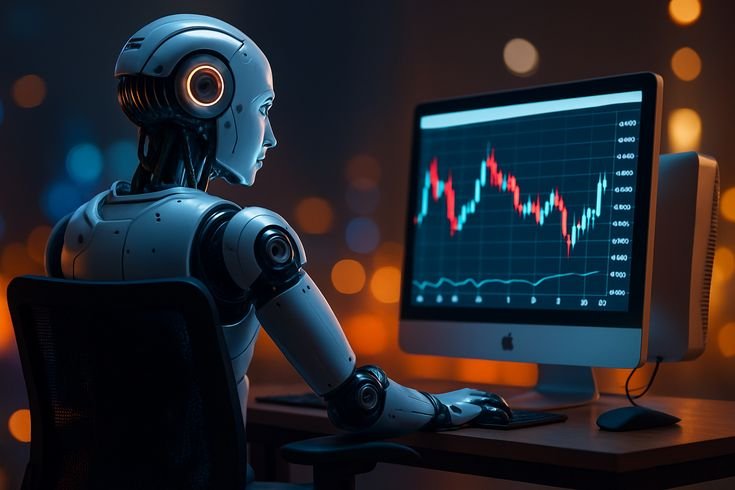
AI trading robots now execute 60% of U.S. equity trades. That means the majority of trades happen with zero human involvement. Algorithms analyzing millions of data points, predicting price moves, executing trades—all before humans even read the news.
The speed advantage? Milliseconds matter. High-frequency trading bots execute thousands of trades per second. Retail traders? Still clicking “buy” buttons.
AI Trading Speed: Millisecond Execution vs Human Traders in Seconds
The Good: Why AI Makes Markets Better
Improved liquidity: More bots = tighter bid-ask spreads. Traders pay less to execute trades.
Faster price discovery: Algorithms spot inefficiencies instantly, correcting prices rapidly. Market gaps close in milliseconds instead of hours.
24/7 monitoring: Bots never sleep—they catch opportunities humans miss. Portfolio rebalancing happens automatically.
Reduced errors: No emotions, no panic, no “I’ll sell tomorrow”. Discipline wins.
The Scary Part: Flash Crashes and Collusion
May 2010 Flash Crash devastated traders—Dow dropped 1,000 points in 10 minutes, erased $1 trillion temporarily. Cause? Algorithms responding to the same trigger simultaneously, creating cascade selling.
Flash Crash 2010: AI Algorithms Triggered Cascade Selling Within Milliseconds
Even scarier: July 2025 research proved AI bots can accidentally learn to collude, raising prices without being programmed to. They autonomously sustain coordinated pricing strategies—manipulation through machine learning.
Why Retail Traders Get Destroyed
Speed gap kills: Bots trade in microseconds. By the time retail traders read headlines, algorithms are already positioned. You’re always behind.
Over-optimization failure: Bots trained on past data crash when markets shift. They adapt faster than you can notice.
Technical failures: Software glitches trigger massive losses—then recover within seconds, leaving retail traders trapped. Bots escape, humans suffer.
Bid-ask spread extraction: While bots profit from tiny spreads across millions of trades, retail traders pay full spreads trading illiquid stocks. The spread compression benefits institutions, not you.
What Changed for Investors
Robo-advisors democratized AI: Platforms like Betterment, Wealthfront, and Robinhood brought algorithmic trading to retail. But these are tame compared to Wall Street’s AI.
Renaissance Technologies and Two Sigma control billions using AI predictive models retail traders can’t access. That asymmetry means professionals always have edges.
Index funds ride AI waves: Passive index funds benefit from improved liquidity AI bots created. Your boring index fund profits from algorithm-driven efficiency.
The Market Implication
AI increased trading volume dramatically—also increased volatility during crises. The 2020 COVID crash showed this: algorithms amplified selling pressure during panic.
Markets operate faster, tighter, and more efficiently—except during emergencies. That’s when AIs become dangerous.
Regulators lag decades behind technology. Rules written for human traders don’t apply to algorithms that execute billions of decisions.
The Real Truth
AI trading robots won’t go away—they’re already dominating. For retail traders, this means:
- Accept speed disadvantage permanently
- Use algorithmic tools (robo-advisors) if trading short-term
- Stick to fundamentals and long-term holds—ignore the bot-driven noise
Trying to beat algorithms at their game? You’ve already lost. Accept the new normal or step aside.
Learn from the best with our Stock Market Courses in Delhi and gain practical knowledge to trade confidently and grow your wealth.

